Smartwatch Sensors: Types, Uses, & How They Work
Published: 08 Aug 2026
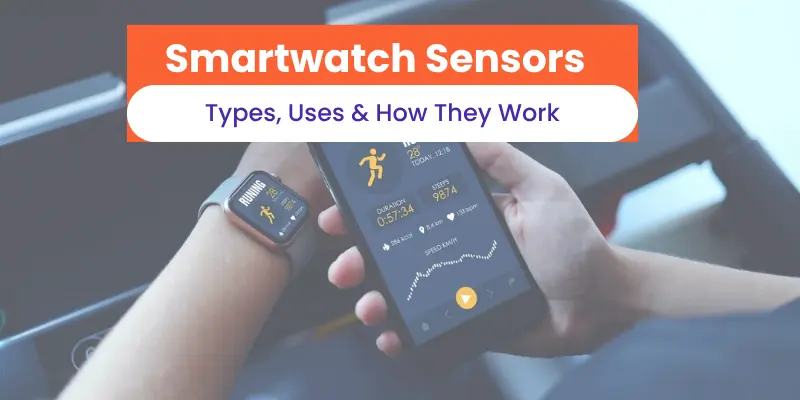
Why does one smartwatch track heart rate and sleep while another focuses mainly on steps and workouts? The difference often comes down to the sensors inside the device. Each sensor has a different job, so the features you get can vary from one watch to another.
In this guide, we’ll look at smartwatch sensors, what they measure, how they work, and where each type is useful. You’ll also see which sensors matter most for fitness tracking, health monitoring, movement, and location tracking. By the end, you’ll have a clearer idea of what those small sensors do and why they matter when choosing a smartwatch.
So, let’s dive in and get started.
Key Takeaways
- Smartwatch sensors collect data that supports many useful features.
- Different watches use different sensors for different needs.
- Sensors help turn body movement and other signals into useful information.
- Sensor quality can affect the usefulness of health and fitness features.
- Understanding sensors can help you compare smartwatches more wisely.
- The right sensors depend on how you plan to use your smartwatch.
What Are Smartwatch Sensors?
Smartwatch sensors are small parts inside a smartwatch that collect information about your body, movement, or surroundings. They help the watch detect changes while you wear it. Each sensor has a specific job and responds to a different type of signal. The watch processes the collected information and uses it to run certain features.
Some sensors detect physical movement, while others respond to light, pressure, or body signals. The number and type of sensors can vary between smartwatch models. A basic watch may have only a few sensors, while an advanced model may include many more. Understanding these parts makes it easier to see how a smartwatch works.
How Do Smartwatch Sensors Work?
Smartwatch sensors work together to collect different types of information while you wear the watch. Each sensor has its own job, and the watch turns the collected data into useful results. To understand the bigger picture, learn more about smartwatch technology and how different parts work together.
- Detecting changes: Sensors notice movement, body signals, light, pressure, or other changes around the watch.
- Collecting data: Each smartwatch sensor gathers information based on what it is designed to measure.
- Measuring movement: An accelerometer detects changes in motion, while a gyroscope tracks how the watch moves and turns.
- Reading body signals: A heart rate sensor uses signals from your wrist to estimate your heart rate.
- Tracking location: GPS receives location signals to help the watch record your route and position.
- Processing information: The watch processes the collected sensor data and uses it to provide useful results.
- Supporting daily features: The information can help with fitness tracking, health monitoring, sleep tracking, and other smartwatch features.
- Showing results: The watch displays the processed information so you can quickly check your activity or other measurements.
Types of Smartwatch Sensors
Smartwatches use different sensors to collect information about your movement, body, and surroundings. Each sensor has a specific role, so the features can vary from one watch to another. Here are the main types you should know when comparing a smartwatch.
Accelerometer
An accelerometer detects changes in movement and helps the watch understand when you are walking, running, sitting, or moving your wrist. It plays an important role in motion tracking and step counting, so it is one of the most useful sensors for everyday activity.
Gyroscope
A gyroscope detects how the watch turns and changes position. It works with the accelerometer to give the watch a better idea of your movement, which can help with workout tracking and other motion-based features.
Heart Rate Sensor
A heart rate sensor measures your heart rate through your wrist. It can provide useful information during exercise, rest, and daily activities, making it an important part of health monitoring and fitness tracking.
ECG Sensor
An ECG sensor records the electrical activity of your heart through sensors that touch your skin. Supported smartwatches can use this reading to provide an ECG result, which may give you more detailed heart information than a basic heart rate reading.
SpO₂ Sensor
An SpO₂ sensor estimates blood oxygen levels by using light-based readings from your wrist. This feature can help you keep track of oxygen-related measurements on supported devices.
Skin Temperature Sensor
A skin temperature sensor measures changes in skin temperature. Some smartwatches use these readings to support features related to sleep, wellness, and other personal measurements.
GPS
GPS helps a smartwatch determine your location and record outdoor routes. It is especially useful for running, walking, cycling, and other activities where you want to see distance and route information.
Magnetometer
A magnetometer detects magnetic fields and can help the watch work like a digital compass. This makes it useful for direction and navigation when you are outdoors.
Barometric Pressure Sensor
A barometric pressure sensor measures changes in air pressure. A smartwatch can use this information to estimate changes in elevation, which can be useful when hiking or climbing.
Altimeter
An altimeter uses pressure or other readings to estimate your height above a reference level. It can help you see how much you have climbed during activities such as hiking or stair workouts.
Ambient Light Sensor
An ambient light sensor detects the amount of light around you. Your smartwatch can use this information to adjust screen brightness, making the display easier to see in different lighting.
Bioimpedance Sensor
A bioimpedance sensor sends a small electrical signal through the body to measure how the body responds. On supported smartwatches, it can help provide information related to body composition.
EDA Sensor
An EDA sensor measures changes in the skin’s electrical response. Some smartwatches use this information to support features related to stress and stress monitoring.
Proximity Sensor
A proximity sensor detects when something is close to the watch. It can help the device understand when it is being worn or manage certain screen and interaction features.
What Do Smartwatch Sensors Measure?
Smartwatch sensors measure different signals that the watch can detect while you wear it. These readings can include motion, body signals, position, air pressure, light, and skin responses. The exact measurements depend on the sensors built into the smartwatch.
The collected readings can show useful changes over time rather than just a single result. For example, the watch may notice changes in your pace, elevation, skin temperature, or daily movement. I find this useful because it gives you a clearer picture of how your watch gathers information during normal use.
Why Are Smartwatch Sensors Important?
Smartwatch sensors are important because they allow a watch to respond to what is happening around and on your wrist. They provide the basic readings that power features such as fitness tracking, health monitoring, and sleep tracking. Without these readings, many smartwatch features would have little information to work with.
They also make everyday tracking more convenient. A smartwatch can use sensor readings to support step counting, location tracking, and stress monitoring without requiring you to record everything yourself. In my view, understanding this role helps you see why the sensors inside a smartwatch matter when choosing the right device.
How Accurate Are Smartwatch Sensors?
The accuracy of smartwatch sensors depends on the device, sensor quality, and how you wear the watch. A loose fit, frequent movement, or poor wrist contact can affect some readings. For the best results, wear the watch correctly and compare its readings over time rather than expecting every result to be perfectly precise.
How to Choose a Smartwatch Based on Its Sensors
The right sensors depend on what you want to do with your smartwatch. Instead of picking a model with the longest smartwatch sensor list, look for the sensors that support the features you actually need.
| Your Main Need | Sensors to Look For | Why They Matter |
| Fitness | Accelerometer, Gyroscope, Heart Rate Sensor | Helps track movement, workouts, and heart rate. |
| Outdoor activities | GPS, Altimeter | Supports route, location, and elevation tracking. |
| Health features | ECG Sensor, SpO₂ Sensor, Skin Temperature Sensor | Provides different health-related measurements. |
| Sleep tracking | Heart Rate Sensor, Skin Temperature Sensor | Supports sleep-related measurements on compatible watches. |
| Stress tracking | EDA Sensor | Supports features related to Stress Monitoring. |
| Everyday use | Ambient Light Sensor, Proximity Sensor | Helps the watch respond better to your surroundings. |
My simple advice is to choose sensors based on your needs, not the number of sensors a watch has. There is little reason to pay more for features you will never use.
Final Thought
We have covered smartwatch sensors, including how they work, what they measure, why they matter, and how to choose the right ones for your needs. Each sensor has a different role, so understanding them can help you get more value from your smartwatch.
My recommendation is to focus on the sensors that match your daily routine instead of choosing a watch just because it has more features. The right sensors can make fitness, health, and activity tracking more useful. Keep learning, folks, and stay tuned for more simple guides on smartwatch technology.
FAQ: Smartwatch Sensors
Here are some of the most commonly asked questions related to sensors in smartwatches.
An accelerometer watch uses an accelerometer to detect changes in movement and position. It helps the watch count steps and recognize activities such as walking or running. It is one of the basic sensors used for movement tracking.
For most people, smartwatch sensors are safe for regular use. They use low-power methods such as light and motion sensing to collect readings from your wrist. If you notice skin irritation or discomfort, remove the watch and give your skin a break.
Yes, they are generally safe for everyday use when you wear the watch as recommended. The sensors use low-power signals to collect readings from your wrist. Keeping the watch clean and wearing it comfortably can also help prevent skin irritation.
The difference between sensors and smart sensors is mainly how they handle information. A basic sensor detects a physical change, while a smart sensor can combine sensing with processing or communication. In a smartwatch, this can help turn raw readings into useful information.
A heart rate sensor usually shines light onto your skin to detect changes in blood flow. It then uses these changes to estimate your heart rate during rest or activity. This helps your watch provide real-time heart rate readings.
The number of sensors depends on the smartwatch model and its features. A basic model may have only a few, while advanced watches can include sensors for movement, heart rate, GPS, temperature, and more. Always check the sensor list if a specific feature matters to you.
The most useful sensors depend on how you plan to use your smartwatch. An accelerometer and heart rate sensor are helpful for everyday activity and fitness, while GPS is important for outdoor tracking. For health-focused features, you may also want sensors such as ECG, SpO₂, or skin temperature.


- Be Respectful
- Stay Relevant
- Stay Positive
- True Feedback
- Encourage Discussion
- Avoid Spamming
- No Fake News
- Don't Copy-Paste
- No Personal Attacks
- Be Respectful
- Stay Relevant
- Stay Positive
- True Feedback
- Encourage Discussion
- Avoid Spamming
- No Fake News
- Don't Copy-Paste
- No Personal Attacks
